Cerebral circulatory failure, headache, migraine, peripheral vascular disorders, arterial disease, cerebral embolism, microcirculatory disorders, arteriosclerosis, senile dementia, memory, neurosensory disorders (vertigo, deafness, balance) of vascular origin in ENT and ophthalmology.


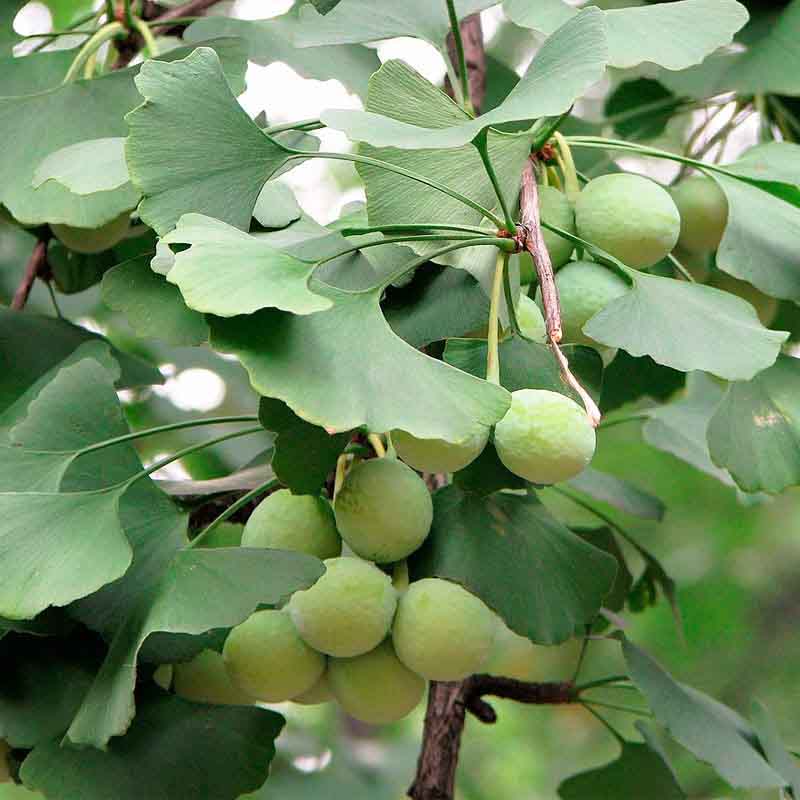
It is planted or torn in spring or summer. The seed can be left under the leaves of the Ginkgo or some other leaf so that it ferments. Two fingers of leaves are placed and the seed is placed on the ground for a while. After a month, the Ginkgos will sprout and will do so for three months. The only thing you have to do is water from time to time, being careful not to overwater and rot the seed. They are planted every 5-10 meters. They adapt well to pots but grow very little, from one to two meters. The Ginkgo is very sensitive to root curling. In a pot, the root must develop. It is better to sow the seed directly on the site or transplant very quickly. It is a tree that can withstand both cold and heat.

1,5 gr. - 3 gr. per infusion, 2-3 times a day. Tincture.
|
Monday
|
Tuesday
|
Wednesday
|
Thursdays
|
Friday
|
Saturday
|
sunday
|
|---|---|---|---|---|---|---|
|
0 events,
|
0 events,
|
0 events,
|
0 events,
|
0 events,
|
0 events,
|
|
|
0 events,
|
0 events,
|
0 events,
|
0 events,
|
0 events,
|
2 events, |
0 events,
|
|
0 events,
|
0 events,
|
0 events,
|
0 events,
|
0 events,
|
0 events,
|
|
|
0 events,
|
0 events,
|
0 events,
|
0 events,
|
0 events,
|
0 events,
|
|
|
0 events,
|
0 events,
|
0 events,
|
0 events,
|
0 events,
|
0 events,
|
|
|
0 events,
|
0 events,
|
0 events,
|
0 events,
|
0 events,
|
0 events,
|